Human Resource Principles: What They Are and How to Apply Them
Published on:
Reading time: 8 min
Topic: Management
Author: Leandro Valencia
What the human resource principles are (merit, training, pay equity, communication, development and dignity) and how to apply them, with functions and a practical case.
Table of Contents
- What is HR administration?
- Functions of the HR department
- Difference between general management and HR management
- Practical case
- Common mistakes in people management
- Conclusion
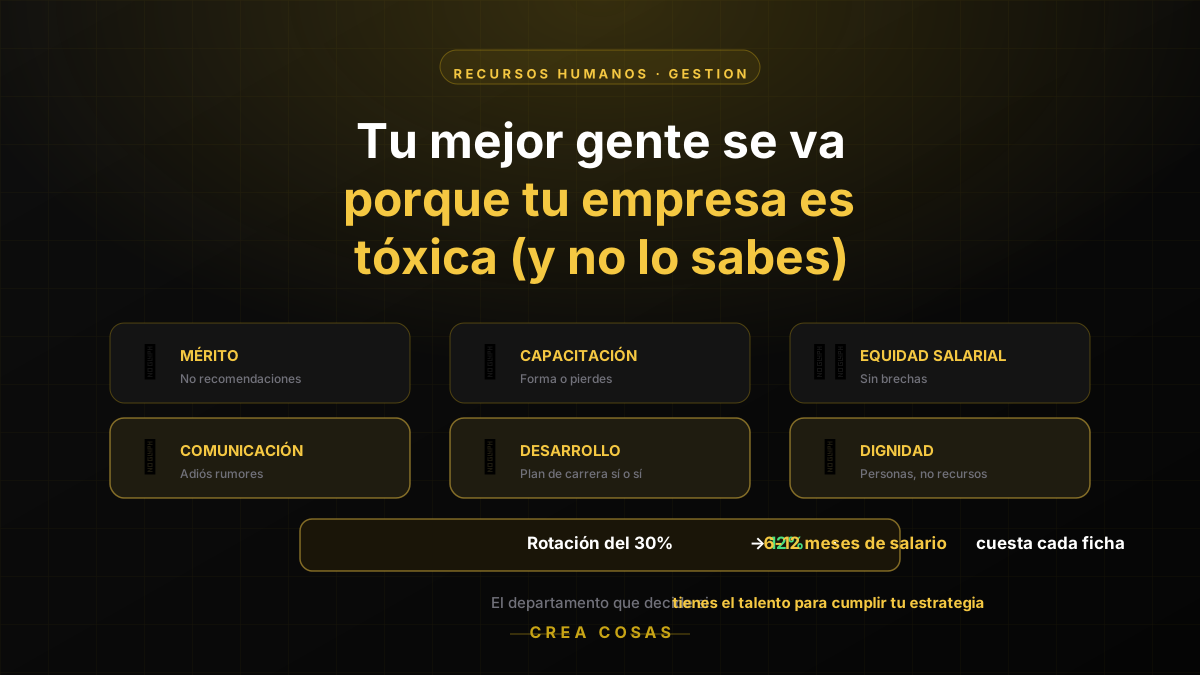
The principles of human resources administration are: merit-based recruitment, continuous training, pay equity, clear communication, people development, and respect for dignity. They guide the management of people so their performance aligns with the company's strategic objectives, treating them not as interchangeable resources but as professionals with careers, motivations, and limits.
This guide explains the principles, the functions of the HR department, the difference with general management, and a practical case. If you're coming from the article on principles of organization (Post #4), here we focus on the human side.
What is HR administration?
Human resources administration (HR) is the branch of business management concerned with attracting, developing, motivating, and retaining the people who make the company work. Although the name comes from "resources," the modern approach prefers to speak of people management or human capital, because people are not interchangeable resources like a raw material.
Its classic areas are:
- Recruitment and selection (attracting and choosing talent).
- Compensation and benefits (salaries, incentives, perks).
- Training and development (training, career plans).
- Labor relations (contracts, conflicts, collective bargaining).
- Climate and culture (wellbeing, engagement, diversity).
- Personnel administration (payroll, onboarding, offboarding, legal compliance).
The difference between "traditional HR" and "modern people management" is not in the areas, but in the focus: the former sees people as a cost to be optimized; the latter, as value to be multiplied.
Fundamental principles of people management
Just as general management has its principles (see management principles), people management has its own. These are the six principles that sustain a professional and respectful HR department:
1. Merit-based recruitment
People are selected for their ability to do the job, not for recommendations, biases, or affinities. This implies transparent processes, objective criteria, and documented decisions.
Application: Define the profile before publishing the offer, evaluate with rubrics, use at least two independent evaluators, give feedback to rejected candidates.
Typical violation: "I like this one, hire them." Or worse: hiring the CEO's friend without a process.
2. Continuous training
People need to train constantly because the world changes fast. A company that doesn't invest in training becomes obsolete and loses talent (the best people leave for somewhere that does train them).
Application: Annual training budget per person, protected time to learn, career plans with training milestones, internal mentoring.
Typical violation: "But if we train them, they'll leave." Classic reply: "And if you don't train them, they stay... but worse."
3. Pay equity
Fair salaries relative to the market, to the responsibility of the role, and between people in equivalent roles. Equity includes gender equity, origin equity, and equity for any protected category.
Application: Salary bands published internally, equity audits, periodic adjustments, transparency about how salary is decided.
Typical violation: Two people in the same role earning very different amounts because one negotiated better on the way in.
4. Clear communication
People need to know what is expected of them, how they're doing, what's happening in the company. Lack of communication breeds rumors, distrust, and rumors worse than reality.
Application: Clear, written objectives, continuous feedback (not only in the annual review), quarterly all-hands meetings, transparency about the state of the business.
Typical violation: People find out about the restructuring on LinkedIn or through a cold mass email.
5. People development
Beyond one-off training, every person should have a career plan: where they can go, what they need to get there, how the company supports them. Development retains talent and improves performance.
Application: Semi-annual career conversations, individualized development plans, internal promotions prioritized over external hires, internal mobility.
Typical violation: The only way to raise your salary or role is to leave for another company.
6. Respect for dignity
People are not numbers, nor "resources," nor boxes on an org chart. They have emotions, limits, lives outside of work. Respecting dignity is the ethical foundation of any serious people management.
Application: Real work-life balance policies, respect for disconnection, humane treatment in layoffs, attention to mental health, zero tolerance for harassment.
Typical violation: "Here we work until 9 at night, if you don't like it, leave."
Functions of the HR department
The concrete, day-to-day functions of the department:
| Function | What it includes | Typical indicator |
|---|---|---|
| Recruitment and selection | Define profiles, publish offers, filter, interview, decide | Time-to-hire, quality of hire |
| Onboarding | Welcoming the new employee in their first weeks | Time-to-productivity, 6-month turnover |
| Compensation | Salary bands, incentives, annual review | Market ratio, internal equity |
| Training | Training plan, budget, impact evaluation | Training hours/person, ROI |
| Development and career | Career plans, promotions, internal mobility | % internal promotions, talent retention rate |
| Climate and culture | Surveys, improvement actions, events, values | eNPS, voluntary turnover rate |
| Labor relations | Contracts, layoffs, collective bargaining, compliance | Absenteeism, litigation |
| Administration | Payroll, onboarding/offboarding, insurance, legal compliance | Payroll accuracy, compliance |
The most common mistake in SMEs is reducing HR to "the person who does payroll." It's a stunted view: the operational function (payroll) exists, but the strategic value is in everything else.
Difference between general management and HR management
| Aspect | General management | HR management |
|---|---|---|
| Object | The whole company | The people of the company |
| Application | Strategy, operations, finance, marketing | Selection, development, climate, compensation |
| Base principles | Fayol (14 principles) | Merit, equity, development, dignity |
| Indicators | EBITDA, market share, productivity | Turnover, eNPS, time-to-hire |
| Risk if it fails | Inefficient company | Toxic company, talent flight |
They are not exclusive: HR management is a specialization within general management. It applies general principles to the particular case of people.
In our complete guide to administrative principles (Post #3) we develop the general ones.
Practical case
Imagine a mid-sized tech company (60 people) with these symptoms:
- Voluntary turnover of 30% per year over the last year.
- A climate survey shows an eNPS of -15 (more detractors than promoters).
- The best technical profiles are leaving for the competition.
- Women earn on average 12% less than men at the same level.
- There is no defined career plan: to move up, you have to leave.
Diagnosis by HR principles:
- Pay equity violated (12% gender gap).
- People development nonexistent (no career plan).
- Communication poor (negative eNPS reflects emotional disconnection).
- Training insufficient (technical profiles leave for somewhere that trains them).
- Respect for dignity in question (high turnover + pay gap = people who feel mistreated).
Action plan:
- External salary audit and internal publication of bands. Immediate adjustment to close the gender gap.
- Defined career plan: levels, requirements, transparent promotion processes.
- Training budget of €1,500/person/year, with protected time.
- Semi-annual development conversations between each person and their manager.
- Culture committee with representation from all levels to identify and fix climate problems.
Expected results at 12 months: turnover reduced to 12%, positive eNPS, retention of technical talent. The cost of these measures is far lower than the cost of turnover (estimated at 6-12 months of salary per person replaced).
Common mistakes in people management
- Hiring fast and firing slow. Urgency leads to bad hires that then take years to remove.
- Confusing climate with culture. Climate is how people feel today; culture is how the company behaves over the long term.
- Reducing HR to administrative management. Payroll and onboarding are necessary, but not strategic.
- Not measuring. If you don't measure turnover, eNPS, or pay gap, you don't know where you stand.
- Asking for loyalty without offering development. Retention is earned with opportunities, not speeches.
Frequently asked questions
What is human resources administration?
It is the branch of business management responsible for attracting, developing, motivating, and retaining people. It is now preferably called "people management" or "human capital" to underline that people are not interchangeable resources.
What are the principles of HR administration?
The six main ones: merit-based recruitment, continuous training, pay equity, clear communication, people development, and respect for dignity.
Difference between HR and talent management?
HR is the global function (includes administration, payroll, labor relations). Talent management is a part of it: it specifically deals with attracting, developing, and retaining key professionals.
Why is turnover a problem?
Because it is expensive (6-12 months of salary per person replaced), destabilizes teams, and usually signals deeper systemic problems (bad management, low equity, lack of development).
How much does a bad hire cost?
It is estimated at between 30% and 200% of the role's annual salary, counting selection cost, training, lost productivity, impact on the team, and replacement cost.
Conclusion
Human resources administration is not an accessory department: it is the function that decides whether your company has the talent it needs to fulfill its strategy. Applying its six principles —merit, training, equity, communication, development, and dignity— is not only ethical: it is profitable.
To keep going deeper:
- The complete guide to administrative principles (Post #3), for the general framework.
- Fayol's 14 principles (Post #2), where several of these principles were already sketched out.
- If you lead a team, you'll also want our guide on principles of organization (Post #4).
And if what you do is entrepreneurship, in how to design a business model (Post #8) you'll see that team and HR decisions are made on day one.
Related Posts
Keep exploring similar content that may interest you
Foundations and Characteristics of Management (Concept and Elements)
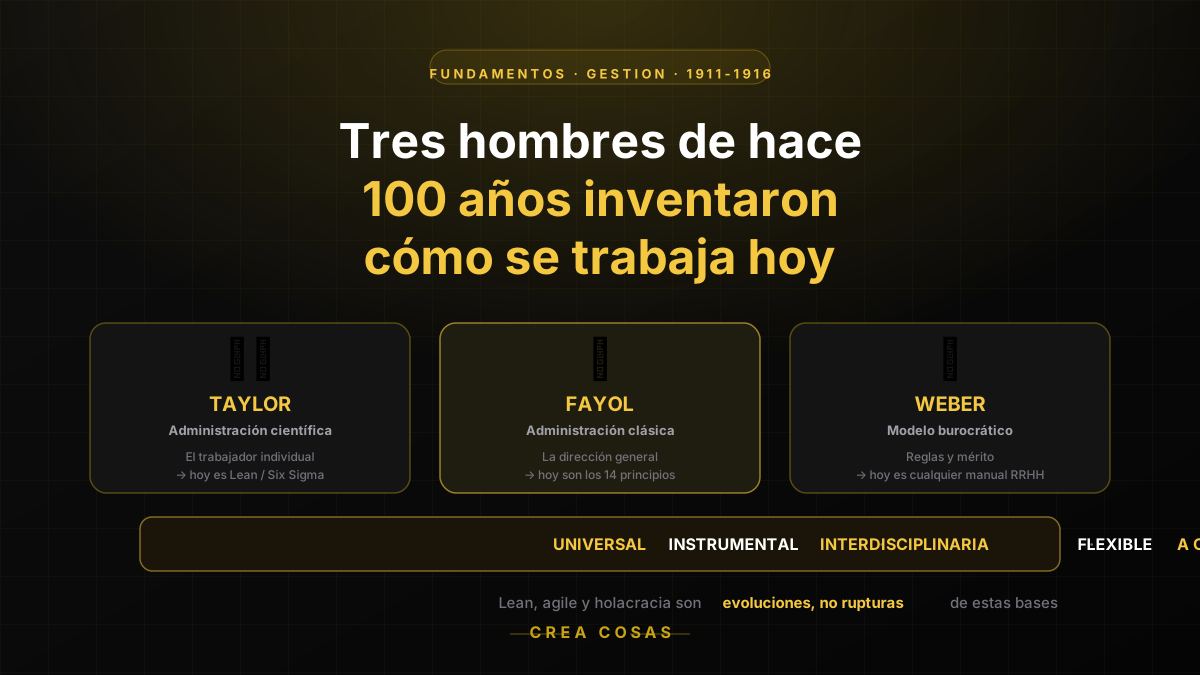
What the foundations of management are (Taylor, Fayol, Weber), its main characteristics, and why they remain the basis of modern management.
Principles of Organization in Management (with Examples)
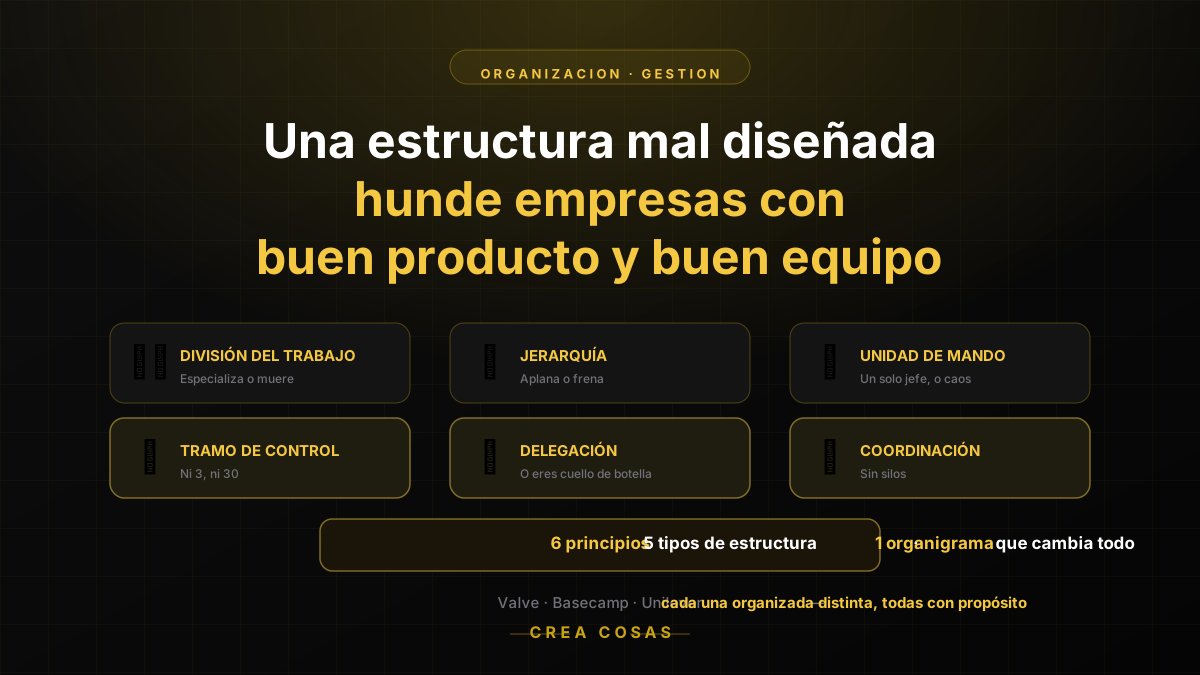
The principles of organizational management explained: division of work, hierarchy, unity of command, span of control, delegation, and coordination. With examples.

Cooling-off policy: a template to pause your project
A policy written in advance to pause an initiative, reassign the team, and decide whether it returns or dies. Template with triggers, deadlines, and rules.
Partnerships
Tools I use every day, on better terms for this community.