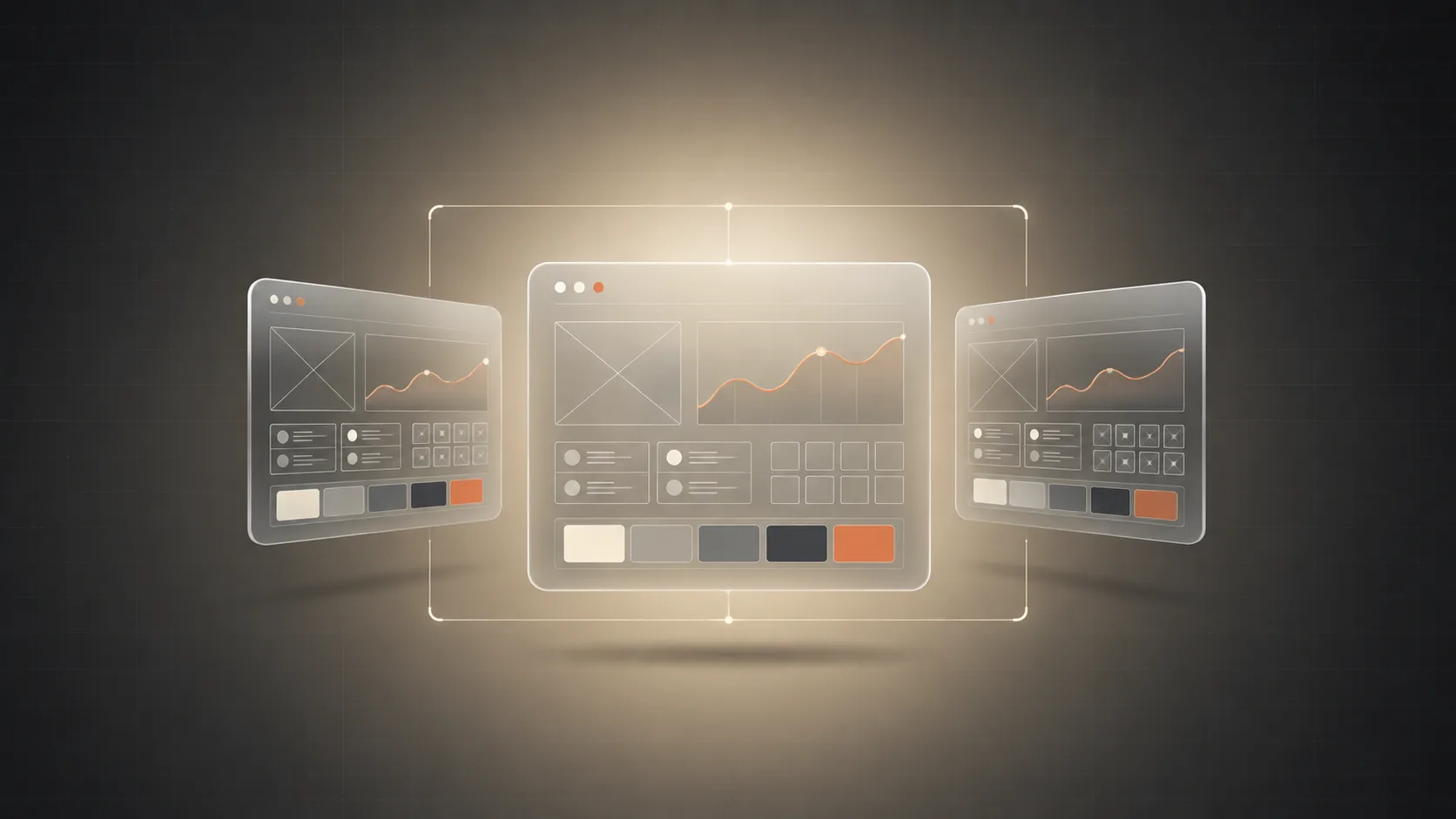
Claude Design alternatives: Open Design vs MiniMax Design compared
Published on:
Reading time: 8 min
Topic: Technology
Author: Leandro Valencia
Claude Design is powerful, but it's closed and tied to a subscription (browser or Claude Desktop app). We compare two real alternatives: Open Design (open source, local) and MiniMax Design (multimodal studio). Which one fits depends on what you do.
Table of Contents
- What exactly is Claude Design
- Open Design: the open source alternative that runs on your machine
- MiniMax Design: it's not the same thing, and that's the point
- Comparison table
Anthropic launched Claude Design on April 17, 2026 as part of Anthropic Labs, and within months it became the reference point for what people are already calling vibe design: you describe what you want, the AI draws it on a canvas, and you keep refining with comments and sliders until it works.
It works well. The problem isn't the quality, it's the shape. Claude Design is closed, tied to Anthropic's model (Opus 4.7) and requires a Pro, Max, Team or Enterprise plan — there's no free access. On the desktop it's better than it sounds: besides the browser, you can open it from the Claude Desktop app on macOS and Windows. It remains a cloud service, though — nothing runs on your machine. On top of that, its usage is measured separately from chat and Claude Code, with weekly per-user limits that can still change because it remains in research preview.
If that's a dealbreaker for you, there are two alternatives genuinely worth considering: Open Design, which is open source and runs on your machine, and MiniMax Design, which aims at something entirely different but keeps getting compared to it anyway. Let's go through all three.
What exactly is Claude Design
Two panels: chat on the left, a live canvas on the right. You write the prompt, Claude generates, and from there you iterate along four paths: chat for broad changes, inline comments on a specific element, direct text editing, and sliders that Claude generates to adjust spacing, color and layout.
What it produces, according to Anthropic's own documentation: interactive prototypes, wireframes and mockups, visual direction explorations, presentation decks with PPTX export, marketing material (landing pages, social media assets) and what they call frontier design — prototypes with voice, video, shaders or 3D, explicitly marked as experimental.
The most interesting piece isn't the canvas but the output. The export menu includes a handoff to Canva and, above all, a packaged handoff to Claude Code: the design intent becomes a bundle that the coding agent picks up with a single instruction. That's where Claude Design stops being "another mockup tool".
It also has an uncomfortable side. Anthropic warns that without a published design system the result comes out "functional but generic". And for teams there are documented gaps: no audit logs or usage reports for administrators, no support for data residency requirements, and the assets you upload are stored persistently.
Open Design: the open source alternative that runs on your machine
Open Design (open-design.ai, repository at github.com/nexu-io/open-design) is the direct answer to the closed model. It's an Apache-2.0 project with a desktop app for macOS and Windows, and as of today it sits at around 83,000 stars on GitHub with nearly 390 contributors.
The core idea is simple and quite clever: Open Design doesn't build its own agent, it plugs in the one you already have. If you use Claude Code, Codex, Cursor, Gemini CLI, OpenCode, Qwen, Kimi or any of the 21 supported agents, Open Design turns it into a design engine. You bring the key (BYOK, bring your own key), and API costs are billed directly to your account instead of being packaged into a subscription.
Everything else follows from that:
- Everything runs locally. Desktop app, daemon and skill catalog on your machine. Artifacts land as files in your project folder, not in a provider's database.
- Your brand is a file. The design system lives in a portable
DESIGN.mdinside your repo, and every skill respects it without you having to explain it again. They ship with more than 150 ready-made design systems. - You can fork, self-host and rebrand. It's Apache-2.0. The daemon runs anywhere Node runs.
- License costs zero. You only pay your provider's API usage.
It generates what you'd expect: prototypes, landing pages, dashboards, slides, brand systems and even HTML video.
One practical note on the models, because BYOK forces a choice: if you'd rather not pay Anthropic's API, the combo that keeps coming up is OpenCode as the agent — it's open source and connects to several providers — running on 's GLM models, whose GLM Coding Plan starts at around 18 dollars a month. With that pair, Open Design runs on models that cost considerably less than a Claude subscription, and swapping providers doesn't require touching the tool.
Where it loses: convenience. Installing a daemon, having an agent configured and managing your own keys is more friction than opening a URL and typing. There's no hosted version today. And one honest warning: much of the comparison material you'll find about Open Design vs Claude Design is published by the project itself, so read it knowing where it comes from.
MiniMax Design: it's not the same thing, and that's the point
A clarification is needed here before we compare badly. MiniMax Design is not a Claude Design clone. It's a multimodal creative studio, and its center of gravity is video, not product interfaces.
It's a desktop app (macOS 13+ and Windows 10+) built on a node canvas where script, storyboard, video, music and editing live in the same flow. What sets it apart is the orchestration: you describe the idea or drop in a brief, and a main agent breaks down the task and launches several agents in parallel — one writes the copy, another generates the images, another builds the timeline, another produces the voiceover. At key points it stops and asks you before continuing.
It also has a Skills ecosystem: reusable flows you install or build yourself (promotional video, e-commerce product image sets, multi-voice audiobooks, character storyboards). Assets are stored locally and exported to professional tools.
Its declared use cases say it all: short drama, e-commerce content, brand TVCs, ad creatives. If what you want is a dashboard or an app prototype, this isn't your tool. If what you want is to crank out ten variants of a video ad without opening Premiere, it is.
On pricing, it has a free tier with recurring credits and monthly paid plans. MiniMax's prices move around a lot and there are discrepancies between what the documentation says and what the checkout charges, so check the official page before subscribing.
Comparison table
| Claude Design | Open Design | MiniMax Design | |
|---|---|---|---|
| What it solves | Prototypes, mockups, slides, landing pages | The same, plus HTML video | Video, image, audio, campaigns |
| Where it runs | Browser and Claude Desktop app (Mac/Win) | Desktop, local (Mac/Win) | Desktop, local (Mac/Win) |
| Model | Opus 4.7, fixed | Whatever you bring (21+ agents) | MiniMax's own models |
| License | Closed | Apache-2.0, open source | Closed |
| Price | Included in Pro/Max/Team/Enterprise, with separate weekly limits | Free; you pay your own API | Free tier + paid plans |
| Where your files live | Provider's cloud | Your repo, as files | Local, with export |
| Brand system | Per organization, in the cloud | Portable DESIGN.md in your repo |
Reusable Skills |
| Code handoff | Yes, to Claude Code | Yes, they're real files | Not its focus |
| Learning curve | Low | Medium-high | Medium |
So, which one do you pick?
Stick with Claude Design if you already pay for Claude Pro or Max, work in a team, and what you need is to go from idea to a presentable first draft without installing anything. The design → Claude Code handoff path has no equal today. It's the lowest-friction option, period.
Go with Open Design if it bothers you that your work lives in someone else's database, if you already use Claude Code or Codex daily, or if you want to version your designs in Git the way you version your code. Also if your team needs to self-host, or if paying for API usage directly works out cheaper for you. It's the only one of the three you can audit, fork and break.
Use MiniMax Design if your work is audiovisual content: reels, ads, product listings, campaign assets. It doesn't compete with the other two; it solves a different problem. And honestly, many people end up using two: one for the interface and one for video.
One last thing that applies to all three. None of them replaces having judgment. Claude Design says it plainly in its own documentation: without a design system behind it, the result is "functional but generic". AI speeds up the draft; the brand is still your job.
Links
- Claude Design → claude.ai/design
- Claude Code → Claude Code guide
- Open Design → open-design.ai · GitHub
- MiniMax Design → design.minimax.io
- Z.AI (GLM models for Open Design) → z.ai
- OpenCode → opencode.ai
And if you're putting together your tool setup and are going to buy software, licenses or digital subscriptions, at Eneba you get 5% off with my link. It's an affiliate link: it costs you less and it helps me keep the blog running. The 5% applies with the code CreaCosas at checkout, as long as you arrive through the link.
Frequently asked questions
Does Claude Design have a free plan?
No. It requires an Anthropic Pro, Max, Team or Enterprise plan, and its usage is measured with weekly per-user limits, separate from chat and Claude Code. Since it's still in research preview, those limits may still change.
Is Open Design really free?
The license is Apache-2.0 and there's no subscription, but it works on a BYOK basis: you plug in your own agent (Claude Code, Codex, Gemini CLI, among 21 supported) and pay API usage directly to your provider.
Is MiniMax Design good for product interface design?
That's not its focus. It's a multimodal creative studio centered on video, image and audio. For app prototypes, dashboards or landing pages, Claude Design or Open Design are a better fit.
Do I need to know the terminal to use Open Design?
Some comfort helps: you have to install a desktop app and a daemon, and have a coding agent configured with your API keys. Its learning curve is medium-high compared to Claude Design's web version.
Related Posts
Keep exploring similar content that may interest you
Z.ai and its GLM models: which is which and when to use each one
A practical catalog of Z.ai's models —GLM-5.3, Flash, 4.6V, OCR, GLM-Image, CogVideoX and the Coding Plan—: what each one does, what it costs, and how to pick the right one for every task.
10 open source AI repos that are changing how we code
A deep dive into 10 open source AI repositories: model gateways, agent environments, automatic diagrams, and Rust-based document conversion.
9 AI tools you should be using (and what each one is for)
Practical guide to 9 AI tools —ChatGPT, Qwen, Codex, Ollama, Google Flow, Vibes, Perchance and Treblo— with what each does, who it's for, how much it costs, and when it makes sense to open it.
Partnerships
Tools I use every day, on better terms for this community.