
Marketing Mix (4Ps): What It Is, Examples and a Template for SMBs
Published on:
Updated on:
Reading time: 11 min
Topic: Marketing
Author: Leandro Valencia
What the marketing mix (4Ps) is: one small business followed from start to finish, three Latin American examples by business type, the 7Ps for services, and a template to copy.
Table of Contents
- What the marketing mix is and why it is still alive after 60 years
- The classic mistake: adjusting only Promotion
- The 7Ps: the marketing mix for services
- Marketing mix template
- The mix is not the strategy: where it fits
- Exercise: change one P this month
The marketing mix is the four levers you adjust to sell: Product, Price, Place (distribution), and Promotion. E. Jerome McCarthy formulated them in 1960 and Philip Kotler popularized them in his textbooks, which is why almost all of us know them as the 4Ps. Sixty years later they are still useful for a simple reason: they are not a theory, they are a checklist of decisions every business makes whether it is aware of making them or not. In this post I walk you through them with a single small business running from start to finish, because the 4Ps are understood together or not at all.
What the marketing mix is and why it is still alive after 60 years
The definition of marketing mix, in one line: the combination of decisions about product, price, place, and promotion with which a business takes its offer to market. The key word is “mix”: it is not about having a good product, a good price, a good place, and a good promotion separately, but about the proportion among the four. It is the difference between a recipe and its list of ingredients.
I think of it as an audio mixing board: when the song does not sound right, turning up the volume on a single channel almost never fixes it; it usually distorts everything. The same happens to small businesses: when sales do not come in, the reflex is to turn up Promotion —more ads, more flyers, more posts— when the problem is usually in another channel of the board: a price that positions you wrong, a product indistinguishable from the one next door, a point of sale where nobody ever looks for you.
That is why the mix is still alive: it forces you to look at all four channels before touching the easiest knob, which is always the promotion one. If you got here without a clear grip on the underlying concept, first clarify what marketing is; the mix is the tool that puts it into practice.
The 4Ps explained with a neighborhood bakery
Let's go with a running example: Panadería La Espiga, in a middle-class neighborhood of Medellín. A family business, twenty years old, good bread, flat sales, and an owner —Doña Gladys— who wants the brand to break out of the neighborhood. Each P answers a different decision question.
| P | Question it answers | La Espiga today |
|---|---|---|
| Product | What am I really selling? | Bread and pastries, with no clear promise |
| Price | How much is what I solve worth to my customer? | The same price as the corner supermarket |
| Place | Where do they look for me when they need me? | Only the counter, with a line at 6 p.m. |
| Promotion | How does the right person find out? | A sign and word of mouth |
Product: what am I really selling?
The trap of the first P is answering too fast: “bread.” Nobody buys bread; they buy breakfast solved before walking into work, the 6 p.m. craving, the Sunday sweet table. Product's job is to decide the concrete promise of what you sell.
Doña Gladys discovers —because she asks, not because she guesses— that her most loyal customer does not come for the bread: she comes for the warm bread at 6 p.m. Product then decides: the promise is “warm at 6,” the variety gets trimmed down to what comes out well, and the packaging changes so the bread arrives home in one piece. She changed the product without changing the oven.
Price: how much is what I solve worth?
Price is not a number: it is a message. It says who you are and who you get compared with. If La Espiga charges the same as the supermarket, it declares itself interchangeable with the supermarket, and against the supermarket no bakery wins on volume.
Price decides: the everyday bread can cost about the same, but the warm bread at 6 p.m. —the promise— charges what it is worth, and the breakfast combo (bread plus coffee) is put together so the office worker does not have to do the math at 6:40 a.m. Doña Gladys also decides who she does not sell to: she does not fight for the customer who compares penny by penny. That is price too.
Place: where do they look for me when they need me?
Place, or distribution: everything that puts your product within the customer's reach. For a bakery it is not only the shop: it is the schedule (are you open when the office worker needs you?), the delivery apps the neighbors already use, the WhatsApp order for pickup without a line, and the shops and cafés nearby that could buy wholesale.
La Espiga notices that the 6 p.m. line scares customers away. Place decides: orders by WhatsApp with a pickup time, and two nearby cafés that buy the pastry line. Same oven, more points of sale. When the owner says “I want to break out of the neighborhood,” the lever is not an ad: it is Place.
Promotion: how does the right person find out?
With the three previous Ps clear, promotion finally has something to say. Promoting “bakery” is burning money; promoting “warm at 6” is a phrase people remember and repeat.
La Espiga's promotion does not start with paid ads: the smell of bread at 5:45 is promotion, the new sign with the promise is promotion, the photo of the 6 o'clock tray in the neighborhood WhatsApp group is promotion. Then, and only then, a small local ad to reinforce. Promotion is the most visible P and the last one you should touch.
Marketing mix examples in Latin America
La Espiga is one case. These three businesses show how the same four decisions change with the type of company.
A neighborhood café
- Product: locally sourced coffee and a breakfast that is ready in five minutes, not a forty-item menu.
- Price: a bit above the chain on the avenue, justified by where the coffee comes from and because they know you by name.
- Place: the shop, plus WhatsApp orders so people can pick up first thing without standing in line.
- Promotion: a loyalty card and the sidewalk chalkboard with the coffee of the day. No paid ads until the chalkboard is working.
An online clothing store
- Product: short collections, a clear size guide, and photos of people in different sizes.
- Price: free shipping above a minimum, instead of permanent discounts that train customers to wait for a sale.
- Place: your own store, a regional marketplace, and sales on Instagram and WhatsApp, where the customer is already asking.
- Promotion: content on how to combine the pieces, and reviews with photos from real customers.
A B2B consultancy
- Product: a diagnostic with a fixed scope and a clear deliverable, instead of an open-ended “advisory” nobody knows when it ends.
- Price: a project fee, not an hourly rate, so the client compares results rather than hours.
- Place: LinkedIn, industry groups, and referrals from previous clients.
- Promotion: case studies with anonymized data, and talks at chambers of commerce or industry associations.
If you are wondering what happens to these levers once artificial intelligence shows up, how the 4Ps change with AI chatbots goes through each P for 2026.
The classic mistake: adjusting only Promotion
The most expensive mistake small businesses make with the marketing mix is the single-lever one: sales drop, promotion goes up. More ads, more stories, more flyers. If the problem was in Product (indistinguishable) or in Price (positioned against giants), promotion accelerates the leak: you pay to bring more people to an offer that does not convince.
A quick diagnosis before spending on ads:
- Do the people who show up buy? If there is traffic and no sales, it is not Promotion: it is Product or Price.
- Do the people who buy come back? If they buy once and disappear, it is Product (or the experience, which in services has its own P, as you will see below).
- Are the wrong customers coming in? If the ones who arrive are looking for cheap and leave with the cheapest, your promotion is attracting the people your Price does not want.
La Espiga lost six months running Instagram giveaways before asking itself what it was promoting. The giveaways brought followers, not customers.
The 7Ps: the marketing mix for services
If your business is a service —or a product business that adds services, like La Espiga when it starts doing catering for events—, the 1960 mix falls short and is extended with three more Ps that Bernard Booms and Mary Bitner proposed in 1981:
- People: who serves the customer and how. In La Espiga's catering, the lady who sets up the table is part of the product; the customer sees her.
- Process: how you order, how it is confirmed, how you respond when something goes wrong. A catering order over WhatsApp with a clear format is worth more than a thousand flyers.
- Physical evidence: what the customer can see of something invisible. Photos from the last event, the impeccable box, the uniform. A service cannot be shown; its evidence can.
The 7Ps are not a fad: they are the 4Ps translated for businesses where the customer does not just buy a thing, but lives an experience with your people and your process.
Marketing mix template
Copy it into a document or a spreadsheet and answer one line per box. Be specific: generic answers are useless for diagnosing. It takes about 30 minutes to fill in.
| P | Key question | Your answer |
|---|---|---|
| Product | What specific problem do you solve, and what is your promise in one sentence a customer could repeat? | |
| Price | Who does your price position you against, and which part of your offer is worth more than you charge? | |
| Place | Where does your customer look for you when they need you, and which step of the purchase is uncomfortable today? | |
| Promotion | Who is the right person, where are they already gathered, and what proof of your promise can they see before buying? |
If you sell services, add three questions from the 7Ps:
- People: who serves customers, and what makes them good at it?
- Process: how do you order, and how do you respond if something fails?
- Physical evidence: what can the customer see of the invisible?
When you finish, underline the lever you have gone longest without touching. It is almost always that one.
The mix is not the strategy: where it fits
The marketing mix is tactics: it adjusts the levers of a business that has already decided whom it serves and with what model. Strategy lives higher up: in how to build your business model you define how you create and capture value; the mix is how you take it to market week after week. If you do not have a clear model yet, or you want to compare with others, check these business models for entrepreneurs.
Once the mix is clear, Promotion works better if you organize it by stages. That is what a marketing funnel does: it takes a person from the moment they discover you until they buy.
Order matters: a perfect mix on top of a broken model produces sales from a business you should never have opened. Doña Gladys can fine-tune all four Ps of the catering, but if the catering leaves no margin, the problem is not in the mix.
Exercise: change one P this month
Just one, not four. Pick the lever you have gone longest without touching —the one you underlined in the previous exercise—, make one concrete change, and measure it for four weeks.
Examples of a measurable change: opening orders by WhatsApp (Place) and measuring orders per week; raising the star product's price by 10% (Price) and measuring whether volume drops; trimming the menu down to what comes out well (Product) and measuring the average ticket. One lever, one metric, four weeks. What you learn is worth more than any marketing course, because it is about your business and not the example business.
The marketing mix is four levers, not one. The classic small-business mistake is not having bad levers: it is always moving the same one —promotion— and calling it strategy. Look at your full board, find the lever you have not touched in months, change it this month, and measure. Sixty years later, that simple exercise is still the best marketing investment a small business can make.
Frequently asked questions
What is the marketing mix?
It is the combination of decisions about product, price, place, and promotion with which a business takes its offer to market. E. Jerome McCarthy summed it up in 1960 as the 4Ps, which is why it is also called the 4 Ps of marketing.
Are the 4Ps still valid, or are they outdated?
They are still valid as a decision checklist: every business still defines product, price, distribution, and communication. What changed are the nuances: today Place includes marketplaces and apps, and Promotion includes content and communities. For services they extend into the 7Ps.
What is the difference between the marketing mix and a marketing plan?
The mix is the lever tool; the plan is the document that organizes objectives, audience, mix, budget, and calendar for a period. The plan uses the mix; the mix does not need a plan to help you diagnose.
What are the 7Ps, and when should you use them?
The 4Ps plus People, Process, and Physical evidence. Use them when you sell services or experiences: there, who serves the customer, how the order is processed, and what the customer can see are part of the product, not a detail.
Does the marketing mix work for a small business?
It is where it works best, because the diagnosis is free: looking at the four levers costs one afternoon and almost always reveals that you were touching only one. A small business does not have the budget to adjust levers blindly; the mix is precisely the map.
Which P is the most important?
None of them on its own; that is the whole idea of a “mix.” But if you force me: the one you have gone longest without touching. The forgotten lever usually returns more than the favorite one.
Related Posts
Keep exploring similar content that may interest you

How to index your website in Baidu and Naver from Latin America
A real-world guide to getting indexed in Baidu and Naver from Latin America: accounts, ICP filings, sitemaps, push API, hreflang and the most common mistakes, with links to the official documentation.
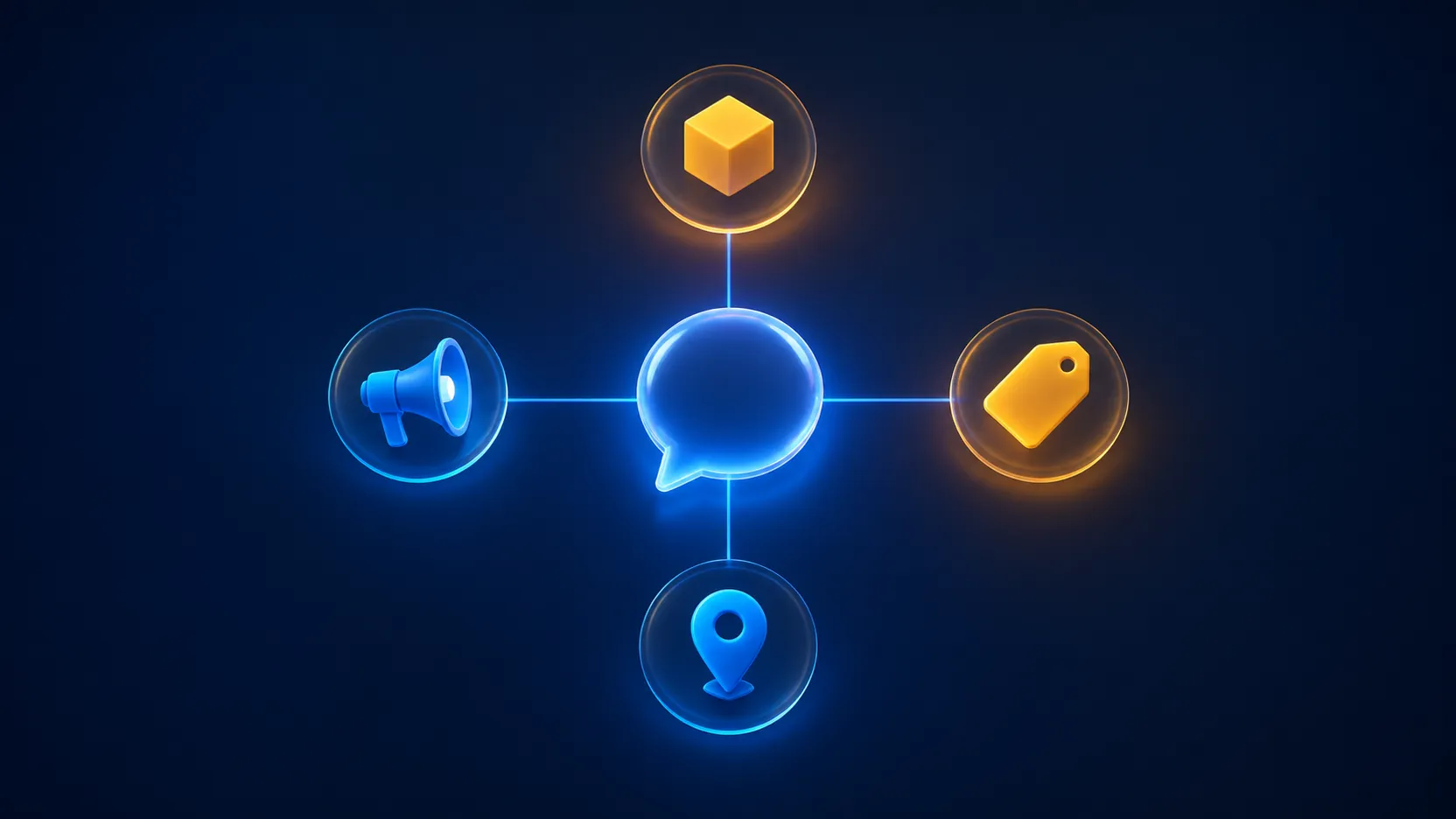
AI Chatbots in Marketing: How They Change the 4Ps in 2026
AI chatbots change the 4Ps in 2026: the conversation becomes part of the product, price is compared instantly, place includes the chat, and promotion closes in the message.

IndexNow in 2026: what it is, how to set it up, and why Google doesn’t use it
An honest guide to IndexNow: which search engines actually support it (Google does not), how to set it up with or without a plugin, deployment automation code, and the results you can realistically expect.
Partnerships
Tools I use every day, on better terms for this community.