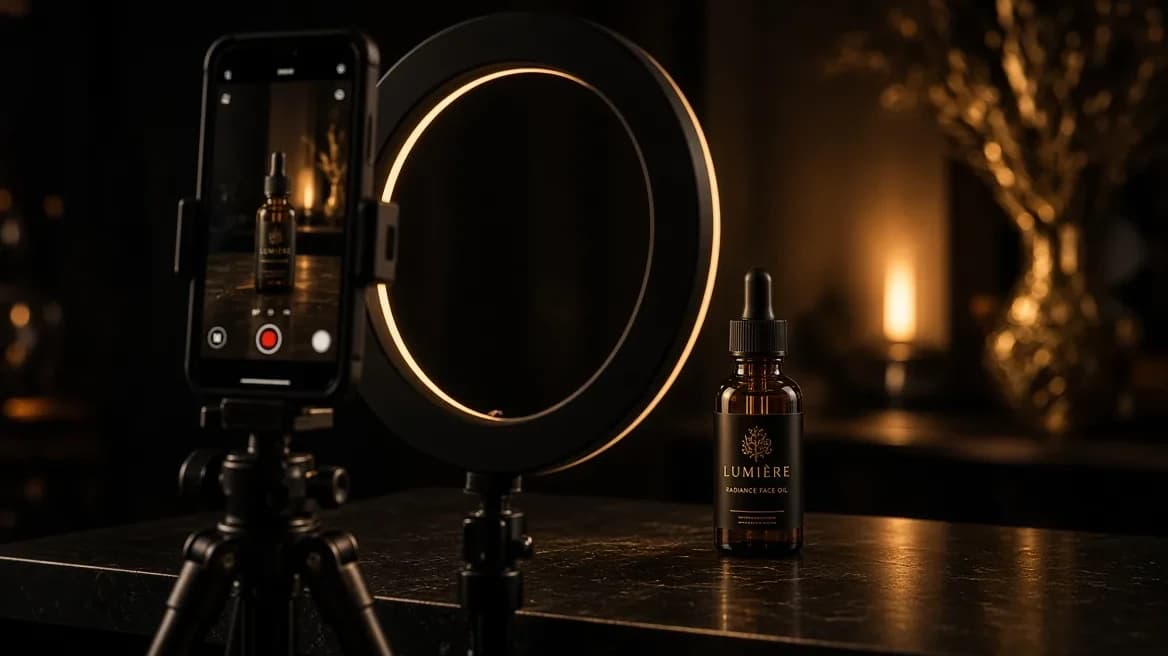
Influencer marketing with micro-influencers
Published on:
Reading time: 11 min
Topic: Marketing
Author: Leandro Valencia
How to work with micro-influencers from the creator's side of the table: pitches that actually get answered, how much to pay, and how to measure results for a small business.
Table of Contents
- Why micro-influencers pay off for a small brand
- What a creator looks at before accepting your influencer marketing campaign
- How to find micro-influencers without paid databases
- How much to pay: the logic, not the rate
- The DM pitch that actually gets answered
- What to ask for in return (and what not to)
- How to spot bought followers
- How to measure results without fooling yourself
Almost every influencer marketing guide is written from the brand's side. This one comes from the other side of the counter: I've been publishing content for over ten years —a YouTube channel with more than 1,300 videos— and brand pitches have been landing in my DMs and inbox for years. I know which ones get accepted and which ones hit the trash before the second line. That's what sets this post apart, and I'm sharing it because if your brand is small, your budget is short, and you can't afford to learn the hard way.
The thesis in short: you don't need a multinational's budget. You need a pitch that doesn't read like spam and a clear logic for choosing, paying, and measuring. That you learn in one read.
Why micro-influencers pay off for a small brand
Micro-influencer, in the convention I use here, is an account between 1,000 and 50,000 followers. For a small business, that range outperforms the big account for three concrete reasons:
Trust is concentrated. A creator with 8,000 followers answers comments, knows their people, and reads their DMs. Their recommendation arrives with the context of a person, not of a paid ad.
The cost fits your scale. For what a single post on a mid-size account would cost you, you can test several small accounts and compare real results instead of betting everything on one post.
The audience is concrete. Micros usually have a clear niche —artisan bakery in Guadalajara, accounting for freelancers in Bogotá—. If your product fits, you're not paying for scattered reach: you're reaching people who were already talking about the topic.
In LATAM there's a bonus: in mid-size cities, the local creator with 5,000 followers moves more sales than the national account. For a small business, influencer marketing with small accounts stopped being plan C: it's the cheapest entry point into the channel, and if you're putting together your overall plan for the year, check it against the 2026 marketing trends.
What a creator looks at before accepting your influencer marketing campaign
Here comes the part almost no guide can tell you: the internal filter of the person receiving the pitch. When an offer lands with me, I evaluate it in seconds and in this order:
- Is the pay fair, or “exposure”? “We mention you in exchange for you making us content” is not an offer: it's asking for free work. Exposure from a brand that contacts me cold doesn't pay my rent.
- Would I use this product even if they didn't pay me? My asset is years of trust. A recommendation my audience detects as pure money costs me far more than what they pay me. If the product doesn't match what I publish, no budget fixes that.
- Do they leave me my judgment? If the brief comes with a word-for-word script, the brand doesn't want my audience: it wants a cheap ad with my face. I ask for the what —benefit, objection, call to action— and keep the how for myself.
- Is the brief clear or a puzzle? Dates, deliverables, channels, amount and payment method, content rights. If none of that is written down, the negotiation goes on forever.
Notice the asymmetry: the brand risks a budget; the creator risks the entire asset. That's why the “pay them little and control everything” play doesn't work: you're asking someone to risk everything they built for your small budget. When the brand understands that asymmetry, the pitch changes tone —and response rate—.
How to find micro-influencers without paid databases
Before paying for a tool, do the detective work nobody wants to do:
- Your competitors' comments. Open the posts of brands in your category and look at who comments with substance, who replies, who has an active community around them. Many are micro-creators already talking about your world.
- The mentions you already have. People who tagged you, reviewed you, or recommended you spontaneously. That's the best possible profile: they already know you and have already told their people about you. Write to those first.
- Search by city and niche. On Instagram and TikTok search “[your category] + [your city]” and review accounts from 1,000 to 20,000 followers with real comments. Medellín, CDMX, Córdoba, Quito: the local scale is where a small business wins.
- Your own customers. If a customer of yours creates content and has been buying from you for a year, the collaboration is a five-minute conversation, not a negotiation from scratch.
With a list of 15 or 20 candidates you can already test. You don't need 200: you need 3 to 5 that truly fit.
How much to pay: the logic, not the rate
There is no single rate, and anyone who gives you one without knowing the case is selling smoke. The calculation logic does exist, and it's this: divide what you pay by the expected real engagement and compare across candidates.
The math I use. Ask each creator for screenshots of their insights: average reach per post and interaction rate over the last 90 days. Divide the asking price by the expected interactions —comments and saves are worth more than likes—. With three quotes in hand you already know what's expensive in your niche and what isn't.
Reference ranges, handle with care. As general orientation in markets like Mexico, on Instagram an account with 1,000 to 10,000 followers usually charges between USD 50 and 300 per post, and one with 10,000 to 50,000 between USD 100 and 1,250; on TikTok the amounts drop a bit and stories cost a fraction of what a Reel or a dedicated video costs. But the range varies enormously by country and by niche, so take these figures as an approximate floor and ceiling, not as a rate card.
Barter + payment. In LATAM barter is common currency and can work when it's honest: product plus a payment below the full rate, agreed up front. What's dishonest is barter in disguise: “we send you the USD 15 product and ask for two videos and a story with a link”. Do the math on the market value of the content you're asking for and compare it with what you're giving. Content in exchange for product only works if the product is truly worth it to that creator and their audience —expensive gear, training, experiences—. If your product is a cheap consumable, pay.
The DM pitch that actually gets answered
The pitches I answer share three traits: they show they've seen my content, they say how much they pay, and they don't take up a whole screen. Copy this structure and fill it in:
Hi [name]. I'm [your name], from [brand and what it does, in one sentence].
I saw your video about [something specific from their content; be specific].
It clicked with me because [what you liked and why their audience].
Proposal: [1 video + 2 stories, or whatever it may be], published between [dates].
Payment: [amount and method]. Complimentary product included, of course.
I'll send you a half-page brief with what to highlight and what not to.
Interested? If it's not your thing, no problem.
That gets a reply. What hits the trash by the second line: “we'd love for you to be an ambassador for our brand” (ambassador almost always means there's no money), messages that mention nothing of yours, and the ones asking for a “collab” without saying what, how much, or by when.
One detail about our scene: many small businesses in LATAM don't hire an agency; the owner writes the DM himself. That becomes an advantage when the owner has already built a presence of his own —if that's your case, this helps with your personal brand on LinkedIn—.
What to ask for in return (and what not to)
If you pay, you're entitled to ask. Three things, without drama:
Real metrics. Screenshots of the post's insights —reach, interactions, clicks where applicable— within the following week. Not screenshots of the profile: of that post.
Use of the content on your channels. Agree in writing whether you can republish the video on your social media, for how long, and under what label. The creator's content is often the best advertising piece your brand will have that quarter; don't leave it trapped in their account.
A code or link to measure with. A discount code unique to the creator, or a link with UTMs. Without that, the campaign is a pretty picture with no consequences.
And what you don't demand if you paid little: eternal exclusivity, perpetual rights, a word-for-word script, or posting times down to the minute. The deal has to be worthy of both parties, or it doesn't happen again.
How to spot bought followers
Before negotiating, invest ten minutes per candidate. Typical signals:
| Signal | What to look at |
|---|---|
| Odd ratio between likes and comments | Thousands of likes and 4 comments: the math doesn't close on real accounts |
| Generic comments | “Excellent!”, “🔥🔥”, “So good” on repeat: bots or comment exchanges |
| Faceless followers | Profiles with no posts, numbers in the name, from countries unrelated to the niche |
| Curves that don't add up | Abrupt follower spikes with no viral post to explain them (ask for growth screenshots) |
| Engagement that doesn't converse | Likes with no replies from the creator: a real community interacts in both directions |
If in doubt, ask for screenshots of the audience demographics (country, age, gender). A serious creator shares them without drama; one with inflated numbers gets offended or sends old screenshots.
How to measure results without fooling yourself
What you measured is what you learned. Three routes, from simplest to most complete:
Discount code. Each creator with their own code. It counts itself. Watch out for very high discounts: they teach you little, because people buy the coupon, not the brand.
Link with UTMs. One dedicated link per creator, with UTM parameters. In your analytics you see visits, not just sales: useful when your product sells slowly or through conversation.
Conversations started. In a small business, a good part of the effect is people writing to you “I saw you in so-and-so's video”. Ask where they came from and write it down. That's the data no dashboard gives you.
And one rule to keep in your head: the first campaign is a test, not a verdict. Measure, compare creators, and repeat with the ones who delivered. The channel pays off through a sustained relationship, not through a one-off shot.
Frequently asked questions
How many followers does a micro-influencer need to have?
The convention runs from 1,000 to 50,000. The number matters less than the relationship: comments with substance, replies from the creator, an audience that matches your buyer. A small account with a real community beats a mid-size one with a bought audience.
Barter or payment?
It depends on what your product is worth to the creator. If it's worth a lot —equipment, training, something they'd genuinely use—, barter can be fair. If not, barter plus payment, or direct payment. The rule: don't ask for content whose market value clearly exceeds what you're giving.
How many creators do I start with?
With 3 to 5. Enough to compare, few enough not to go broke. In the second round, repeat only with those who generated a used code, clicks, or conversations.
Instagram, TikTok, or YouTube?
Wherever your buyer is, not wherever the trend is. YouTube for decision-driven niches (reviews, tutorials), Instagram for visual and local consumption, TikTok for fast reach with a short shelf life. The right creator usually knows which format works for your category: ask them.
Do I give the creator a script?
No. Not a script; a brief, yes. What to highlight, what to avoid, which facts are correct, deadline, deliverable, and call to action. The how belongs to the creator. An imposed script guarantees a weak ad their audience scrolls right past.
Working with micro-influencers isn't buying reach: it's renting the trust someone else built over years, and the real price of that rental is respecting the judgment that sustains it. Small brands that get it —pay fairly, ask for what's measurable, don't impose scripts— become the kind of client creators answer first. The ones that don't keep paying for messages that die in the inbox.
Related Posts
Keep exploring similar content that may interest you

How to create a marketing plan step by step (with template)
How to make a marketing plan you actually open every week: a copyable 8-field template, a worked small-business example, typical mistakes, and a quarterly review.

How to Choose a Creator Management Agency: Checklist
A checklist for creators and brands looking for a creator marketing agency: how they charge, what to ask before you sign, and red flags in brand deals.

How to index your website in Baidu and Naver from Latin America
A real-world guide to getting indexed in Baidu and Naver from Latin America: accounts, ICP filings, sitemaps, push API, hreflang and the most common mistakes, with links to the official documentation.
Partnerships
Tools I use every day, on better terms for this community.