
The Future of Team Management: Radical Transformation with AI and Remote Work
Published on:
Reading time: 16 min
Topic: Management
Author: Leandro Valencia
A deep analysis of how remote work and artificial intelligence are redefining team management, exploring opportunities, challenges, and the crucial role of human leadership in this new paradigm.
Table of Contents
- 1. Introduction to the Imminent Future of Team Management: A New Labor Era
- Call to Action: Share, Reflect, and Lead the Change
Team management, a fundamental pillar in any organization, is undergoing a seismic transformation. Two titanic forces, the unstoppable rise of remote work and the increasingly deep integration of artificial intelligence (AI), are converging to redefine the rules of the game. In a business landscape that is globalizing and technifying at a breakneck speed, leaders find themselves at a crossroads: adapt or become obsolete. The task is no longer just to lead, but to orchestrate diverse, geographically dispersed teams that are increasingly powered by intelligent automatic tools.
This article dives deep into what team management will look like in the near and distant future. We will explore the unprecedented opportunities these trends offer, as well as the inherent challenges organizations and their leaders must navigate. Finally, we will outline how visionary leaders can navigate this changing landscape not just to survive, but to thrive, creating work environments that are more effective, collaborative, innovative, and, crucially, human.
1. Introduction to the Imminent Future of Team Management: A New Labor Era
The future of work is not a distant prophecy; it is being actively reconfigured before our eyes by two main catalysts: the consolidation of remote work as a viable and desired modality, and the incursion of artificial intelligence into practically every facet of business operations. While these trends are already leaving their mark on numerous organizations, their combined and long-term impact is only just beginning to be glimpsed.
As companies embrace telecommuting and automated solutions with greater conviction, team leaders find themselves compelled to fundamentally rethink their approach toward:
- Talent management and development.
- Building and maintaining organizational culture.
- Fostering effective collaboration and communication.
- Measuring performance and productivity.
According to a revealing study by Owl Labs, a staggering 92% of companies globally are actively adopting remote work to some extent. This figure is not only impressive but also highlights the magnitude of labor evolution, marking a drastic shift from the pre-pandemic era, where dependence on physical offices was the unquestionable norm. In this new labor ecosystem, advanced technological tools and AI are not mere accessories but will play an absolutely crucial role in facilitating seamless communication, optimizing individual and collective productivity, and personalizing talent development on a scale never seen before.
Initial Reflection: The question is no longer if remote work and AI will change team management, but how and how fast we must adapt to leverage their potential and mitigate their risks.
2. The Unstoppable Rise of Remote and AI-Powered Teams
The synergy between the flexibility of remote work and the efficiency of AI is creating a new team archetype: more agile, more diverse, and potentially more productive.
Remote Work: From Pandemic Necessity to New Strategic Normal
The global COVID-19 pandemic acted as an unprecedented accelerator for the adoption of remote work. What was initially a contingency measure has transformed, for many companies and employees, into a strategic preference. Far from being a passing fad, the trend is not only rising but is unlocking transformative opportunities:
- Access to a Global Talent Pool: Geographic barriers vanish. Companies are no longer limited to hiring local talent, being able to access the best professionals regardless of where they reside. This fosters diversity of thought and experience.
- Greater Flexibility and Work-Life Balance: Employees value the autonomy to manage their schedules and the ability to better integrate their professional and personal responsibilities, which can translate into higher satisfaction and lower turnover.
- Operational Cost Reduction: Companies can see reductions in office rent, utility bills, and other costs associated with physical spaces.
Hybrid work, a carefully orchestrated combination of remote and in-office work, is emerging as the dominant model in the future. Organizations are recognizing that not all tasks require a traditional office environment and that flexibility can be a key competitive advantage. However, this new normal demands management that is more flexible, adaptive, and trust-based.
The Transformative Impact of AI on Remote Work Dynamics
Artificial intelligence is emerging as an indispensable ally for companies seeking to manage dispersed teams more efficiently and effectively. Its application spans multiple areas:
- Task Optimization and Coordination: AI tools are simplifying meeting scheduling (considering different time zones), coordinating complex projects, and intelligently monitoring productivity.
- Smart Project Management Platforms: Solutions like Asana, Trello, and Monday.com are integrating AI capabilities to offer personalized recommendations on optimal task assignment, more accurate delivery time estimation, and proactive identification of potential bottlenecks. This not only improves operational efficiency but also increases transparency in project execution.
- Sentiment Analysis and Employee Well-being: Some AI tools can analyze communication patterns (anonymized) to detect early signs of burnout, demotivation, or conflict within remote teams, allowing leaders to intervene proactively.
- Personalization of Learning and Development: AI can identify individual skill gaps and recommend personalized learning paths, ensuring remote team members continue to grow professionally.
However, implementing AI in team management is not without ethical challenges. Crucial issues arise regarding data privacy, algorithmic transparency, and the potential for bias in AI tools. Organizations must address these issues with the utmost seriousness, ensuring that the technologies used respect labor ethics, protect personal information, and guarantee equity in performance evaluations, hiring decisions, and development opportunities.
3. Keys to Managing Successful Remote Teams in the Future
Effective remote team management presents unique challenges that require an intentional and adapted approach. Leaders must become architects of trust, masters of digital communication, and promoters of virtual cohesion.
Building and Maintaining Trust at a Distance: The Invisible Foundation
Trust is the lubricant of any high-performance team, and in a remote environment, its construction and maintenance must be even more deliberate and constant.
- Radical Transparency: Leaders must openly communicate goals, challenges, changes, and decisions. Shared information reduces uncertainty and fosters a sense of belonging.
- Clear and Consistent Expectations: Clearly defining roles, responsibilities, objectives, success metrics, and communication protocols is fundamental. This avoids misunderstandings and empowers team members.
- Open and Authentic Communication: Fostering an environment where team members feel safe to express their ideas, concerns, and feedback, both positive and constructive. Tools like
Slack,Microsoft Teams, orZoomare channels, but the quality of interaction depends on leadership. - Empowerment and Autonomy: Trusting that team members will manage their time and tasks effectively. Micromanagement is especially toxic in remote environments.
Leveraging Technology to Facilitate Seamless Collaboration
Technology is the backbone that sustains collaboration in distributed teams. Its correct choice and implementation are critical.
- Centralized Project Management Platforms: Ensuring all team members have access to and master tools that allow real-time collaboration, progress visualization, and centralized information management (e.g.,
Notion,ClickUp, besides those already mentioned). - Effective Multichannel Communication: Using different tools for different purposes: chat for quick queries, video calls for in-depth discussions, email for formal communications, etc.
- Productive Virtual Meetings: Establishing clear agendas, fostering active participation from everyone, using interactive features (virtual whiteboards, polls), and ensuring meetings have a defined purpose and actionable conclusions.
- Digital Accessibility and Inclusivity: Guaranteeing that all tools and platforms are accessible to team members with diverse needs and technological skills. Leaders must be aware of the digital divide and ensure no one is left behind.
Fostering a Strong Sense of Virtual Community and Belonging
One of the greatest risks of remote work is the feeling of isolation and social disconnection. Combating this requires a proactive effort.
- Virtual Team Building Activities: Regularly organizing non-work activities, such as virtual coffees, online games, virtual happy hour sessions, or shared interest clubs.
- Informal Communication Channels: Creating digital spaces (e.g., Slack channels dedicated to hobbies or non-work topics) where team members can interact in a more relaxed and personal way.
- Recognition and Celebration of Achievements: Publicly highlighting individual and team successes, no matter how small, to reinforce the sense of contribution and belonging.
- Face-to-Face Interaction Opportunities (when possible): For hybrid or remote teams that can meet occasionally, planning strategic in-person encounters can enormously strengthen bonds.
4. The Deep and Multifaceted Impact of AI on Team Management
Artificial intelligence is not just an automation tool; it is a strategic partner that can transform how leaders manage, develop, and optimize their teams.
Intelligent Automation of Administrative and Repetitive Tasks
One of AI's most immediate and tangible contributions is freeing up time for leaders and team members by automating tasks that consume much time but offer little strategic value.
- Virtual Assistants and Chatbots: They can manage complex meeting scheduling, filter and prioritize emails, answer employee FAQs, and even help in onboarding new members.
- Report Generation and Summaries: AI can analyze large volumes of data and generate progress reports, meeting summaries, or trend analysis automatically.
- Optimized Workflows: By automating process steps, AI can reduce human errors and accelerate task completion, allowing team members to focus on creative and complex problem-solving activities.
Predictive Analysis and Data-Driven Decision Making (People Analytics)
AI is taking "People Analytics" to new heights, providing leaders with deep and actionable insights about their teams.
- Identification of Performance Patterns: By analyzing data on work habits, tool usage, task completion, and collaboration, AI can identify patterns indicating high performance, potential improvement areas, or burnout risk.
- Prediction of Development Needs: AI can suggest personalized training paths and development opportunities based on each employee's skill profile and the organization's future needs.
- Workload Optimization and Resource Allocation: Intelligent algorithms can help distribute tasks more equitably and efficiently, considering skills, availability, and current workload of each team member.
- Improvement of Strategic Decision Making: By providing objective data and predictive analysis, AI helps leaders make more informed decisions about team structure, workforce planning, and retention strategies.
AI Revolution in Hiring and Continuous Talent Development
From attraction to professional growth, AI is optimizing the entire talent lifecycle.
- Intelligent Candidate Selection: AI tools can analyze resumes and online profiles at scale to identify candidates that best fit job requirements and organizational culture, reducing unconscious bias (if correctly designed and trained).
- Personalized Onboarding Experiences: AI can guide new employees through onboarding processes adapted to their role and learning pace.
- Adaptive Learning Platforms: AI systems can create dynamic learning experiences that adjust to each individual's progress and needs, recommending relevant content and appropriate challenges.
- Identification of Future Leaders: By analyzing performance, skills, and potential, AI can help identify employees with the highest leadership potential for accelerated development programs.
5. Monumental Challenges and Golden Opportunities for Future Leaders
The new team management paradigm, driven by remote work and AI, presents both formidable obstacles and exciting possibilities for leaders willing to evolve.
The Imperative of Adaptive and Agile Leadership
Future leadership can no longer be static or based on a single model. Adaptability will be the supreme skill.
- Style Flexibility: Leaders must be able to adjust their leadership style (directive, coach, delegator, visionary) according to the situation, the individual, and the changing needs of the team and market.
- Diversity Management in Multiple Dimensions: Leading diverse teams (culturally, generationally, geographically) requires high sensitivity and the ability to create an inclusive environment where all voices are heard and valued.
- Navigating Uncertainty: In a constantly changing world, leaders must feel comfortable with ambiguity and be able to guide their teams through uncertainty with calm and confidence.
- Lifelong Learning: Leaders themselves must be voracious learners, staying up to date with new technologies, management methodologies, and market trends.
Critical Focus on Emotional Intelligence (EQ) and Soft Skills
As AI takes over more technical and analytical tasks, intrinsically human skills, especially emotional intelligence, become even more valuable.
- Deep Empathy: The ability to understand and share the feelings of team members, especially in a remote environment where non-verbal cues may be limited.
- Effective and Persuasive Communication: Articulating clear visions, giving constructive feedback, resolving conflicts, and motivating through digital and in-person communication.
- Self-Awareness and Self-Regulation: Understanding one's own strengths, weaknesses, and emotions, and managing them effectively to lead by example.
- Building Meaningful Relationships: Fostering authentic and trust-based connections within the team, creating an environment of psychological safety.
- Resilience: Leaders who demonstrate resilience in the face of setbacks inspire their teams to do the same.
Leaders who actively cultivate their own and their teams' emotional intelligence will be much better positioned to navigate complexity, foster genuine collaboration, and build strong, adaptive organizational cultures.
6. The Future of Work Is, and Must Be, Deeply Human-Centric
Despite fascination with technological advances and the promise of unprecedented efficiency, it is crucial to remember that the future of work, to be sustainable and meaningful, must continue to revolve around people. The true key to success will not lie in replacing humans with artificial ones but in finding a harmonious symbiosis where technology enhances our intrinsic capabilities.
Prioritizing Holistic Employee Well-being
Well-being can no longer be an afterthought or a marginal benefit; it must be a fundamental strategic priority. Future companies that thrive will be those that understand sustainable productivity emanates from healthy, committed, and balanced employees.
- Real Work-Life Balance: Fostering truly flexible work models that allow employees to integrate their professional and personal lives in a healthy way.
- Mental Health in Focus: Implementing mental health support programs, promoting an open culture on the topic, and training leaders to recognize and address signs of stress or burnout.
- Digital Disconnection: Establishing clear norms and expectations about availability outside working hours to prevent "technostress" and burnout.
- Purpose and Meaning: Helping employees connect their daily work with a larger purpose, both individually and organizationally.
Augmented Intelligence: Fruitful Collaboration between Humans and Machines
The concept of augmented intelligence (AI as an amplifier of human intelligence, not a replacement) offers a more optimistic and productive vision. Rather than fearing that AI will make us obsolete, we should see it as a powerful tool to:
- Free Up Creativity: By automating routine tasks, AI can free up time and mental energy for humans to focus on innovation, creative problem-solving, and strategic thinking.
- Boost Productivity: AI can analyze data and patterns at a speed and scale humans cannot, providing insights that improve decision-making and efficiency.
- Improve Collaboration: AI tools can facilitate communication between global teams, translate languages in real-time, and help coordinate complex projects.
- Personalize Experiences: From learning to performance management, AI can help create more personalized and effective experiences for each employee.
The future is not a battle between humans and machines, but an opportunity for us to collaborate in new and smarter ways.
7. Conclusion: Future Team Management Is a Delicate Fusion of Advanced Technology and Essential Humanity
The horizon of team management is drawn as a landscape where technology and humanity are not opposing forces, but indispensable allies. Success will not come from choosing one over the other but from skillfully weaving them into a coherent tapestry. The key will lie in integrating the emotional intelligence, innate creativity, and holistic well-being of employees with the analytical power of artificial intelligence and the operational flexibility of remote work tools.
Tomorrow's (and today's) leaders must transform at an unprecedented speed. It is no longer enough to be efficient managers; they must evolve to become empathetic visionaries, architects of resilient cultures, and facilitators of digital and human collaboration. Their role is to deeply understand the importance of flexibility, trust, authentic communication, and continuous adaptability in this new digitized world.
Philosophical Reflection: The Future of Work and the Preservation of Our Human Nature
As technology infiltrates every corner of our labor existence, we face a deep existential dilemma: how can we preserve and enhance our humanity in an increasingly automated, datified, and potentially algorithm-controlled world?
The answer, perhaps, lies not in a Luddite rejection of technology, but in a conscious and ethical embrace of it; one that uses it not to diminish us, but to enhance the best of ourselves: our capacity to create, to connect, to feel, to dream. Future work should not aim to be a dehumanized process, a mechanistic and cold assembly line, but a platform for each individual to flourish, develop their maximum potential, and contribute meaningfully.
True innovation, then, does not reside solely in the silicon of machines, but in the plasticity of the human mind, in our unparalleled ability to adapt, learn, collaborate, and connect with others on deep levels of understanding and empathy.
Thus, the future of work and team management should not be visualized solely as a battlefield for efficiency and productivity at any cost. They should be conceived, above all, as a fertile space for overflowing creativity, fruitful collaboration, and the blossoming of holistic human well-being. This is the challenge and the opportunity inviting leaders to transcend the role of mere managers to become authentic humans who lead with empathy, with future vision, and with an unwavering commitment to the collective well-being of their teams and society as a whole.
Call to Action: Share, Reflect, and Lead the Change
This article has barely scratched the surface of how emerging tools and future management approaches can—and will—radically transform how we lead and operate in our teams. But the true question, the one that directly challenges you, lies in how YOU will adapt to these new realities and, more importantly, how you will apply them proactively and ethically in your professional life and in your teams.
I invite you to a deep reflection:
- How do you think these changes (remote work, AI) will specifically affect your role, your team, and your career path in the next 2, 5, or 10 years?
- What skills do you need to develop or strengthen to lead successfully in this new paradigm?
- What steps can you start taking today to prepare your team and your organization for this future?
Share this content with your colleagues, your leaders, your friends. Start conversations, foster debate. Together, we can reflect on how to apply these learnings not just to survive, but to create work environments that are more human, fairer, more innovative, and more efficient.
Be an active part of the conversation. Take this debate beyond these lines, into your team meetings, your strategic planning, your daily interactions. We are all building the future of team management together, now.
Related Posts
Keep exploring similar content that may interest you

The Best-Kept Secret of Productivity!: Why is Dividing Work So Important?
We explore in depth why the division of labor is crucial for productivity, team well-being, and result quality. Learn to leverage specialization, prevent burnout, and manage processes efficiently, with practical reflections and tips.
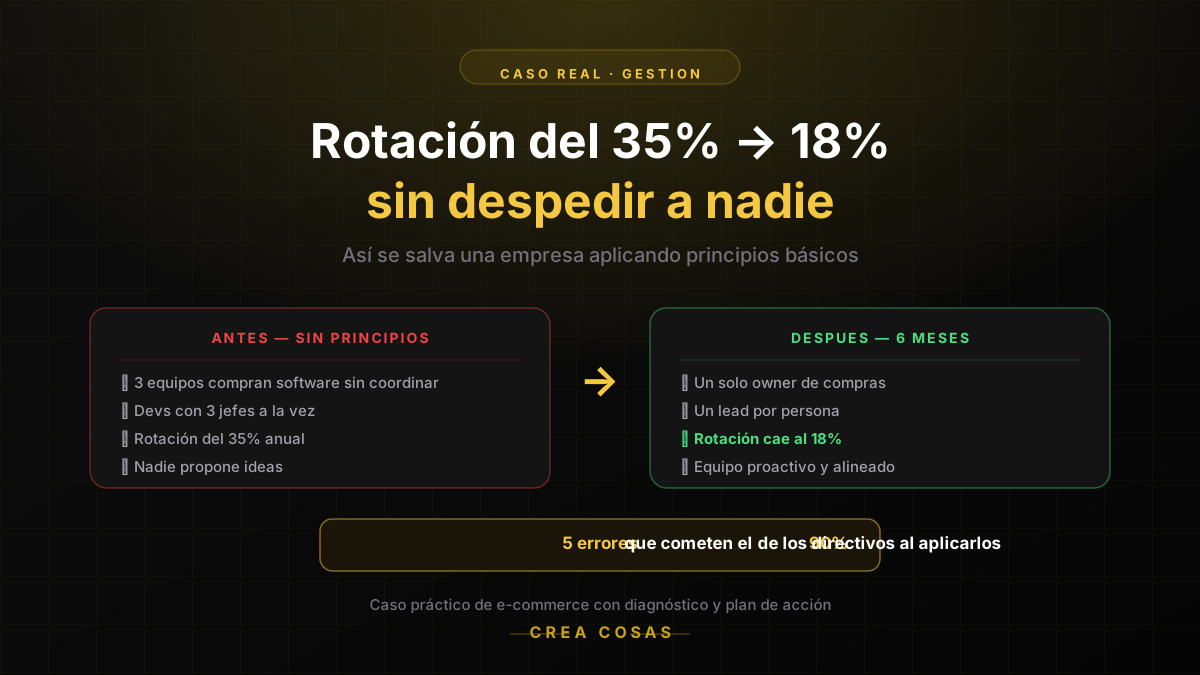
Administrative Principles: A Real Small-Business Case Study
Administrative principles applied to a real small business: what was measured, what changed, and what results it produced. A step-by-step case study, not theory.
Digital Transformation (Part 2): Automating Processes in a Chatbot
How to bring a process into a chatbot: inputs, REST API validations, outputs, brand personality, and ad-driven funnels to automate the entire customer lifecycle.
Partnerships
Tools I use every day, on better terms for this community.